

The modern entrepreneur faces a truly daunting digital landscape. Data flows from every corner of the vast internet. Leads arrive through social media, email, and direct chat. However, managing this chaos requires more than just grit. It demands a sophisticated, centralized, and highly intuitive system. This is where finding the best sales CRM for small businesses becomes a priority. Without organization, even the greatest product eventually fails.
A CRM is no longer just a digital Rolodex. It is the beating heart of your sales engine. It tracks every interaction, every promise, and every deal. In 2026, automation is the key to local success. Small firms must compete with global giants every day. They need tools that offer high-level corporate power. Yet, these tools must remain affordable and very simple. Let us explore the finest solutions for your journey. Clarity is the ultimate gift you give your team.
The Philosophy of Systematic Growth
Why do some small businesses thrive while others stall? The answer usually lies in their internal sales systems. Successful owners do not rely on mere human memory. They build a “Single Source of Truth” for data. This is the core value of the best sales CRM for small businesses. It ensures that no potential customer is ever forgotten.
Imagine a world without scattered, messy, confusing spreadsheets. Think of a workspace where every lead is visible. You can see the history of every single conversation. This level of clarity fosters deep trust with clients. They feel heard, valued, and understood by your brand. High-level English literature reminds us that order brings peace. In business, order also brings consistent, scalable monthly revenue.
The Three Pillars of a Small Business CRM
- Lead Management: Capturing and qualifying every new prospect.
- Workflow Automation: Removing the burden of repetitive manual tasks.
- Insightful Analytics: Understanding exactly where your money comes from.
10 Best sales CRM for small businesses
1. Pipedrive: The Visual Sales Specialist
Pipedrive remains a top contender for visual-minded teams. It was built by salespeople specifically for high-growth sales. This makes it the best sales CRM for small businesses. The interface uses a clean, “drag and drop” pipeline. You can see exactly where every deal stands today.
It prevents “analysis paralysis” by focusing on active steps. You always know what action to take next. Pipedrive also offers excellent mobile app features for teams. Salespeople can update their deals while on the road. It keeps the entire team synchronized and perfectly aligned.
| Feature | Pipedrive Basic | Pipedrive Professional |
| Pipeline Views | Unlimited | Unlimited + AI |
| Email Sync | Manual | Full Two-way Sync |
| Reporting | Basic | Advanced Custom Dashboards |
| AI Sales Assistant | No | Yes, Included |
| Price Point | Affordable | Mid-range |
2. HubSpot: The Free Growth Engine
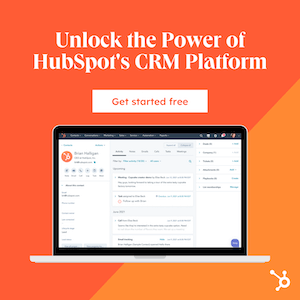
HubSpot is famous for its generous “Free Forever” tier. This makes it the best sales CRM for small businesses starting. You get contact management, deal tracking, and email integration. The platform grows seamlessly as your budget eventually increases.
HubSpot’s ecosystem is incredibly vast and deeply integrated. You can add marketing, service, and operations hubs later. This prevents the need for messy software migrations later. The user interface is polished, modern, and very professional. It feels like using a high-end consumer application daily.
Why HubSpot Wins in 2026
- The best free tier in the entire industry.
- Excellent educational resources through HubSpot Academy.
- Seamless integration with almost every modern digital tool.
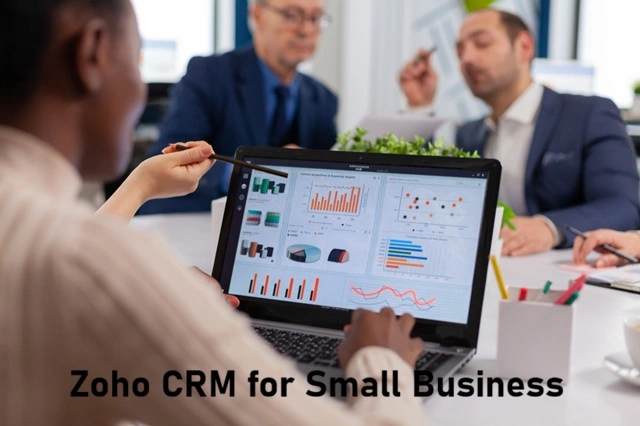
3. Zoho CRM: The Customization Champion
Zoho offers a staggering amount of power for builders. If you like customization, this is your perfect match. It is often called the best sales CRM for small businesses seeking flexibility. You can change almost every field, layout, and button.
Zoho also includes “Zia,” an advanced AI sales assistant. Zia predicts which deals are most likely to close. This helps your team prioritize their limited daily time. Zoho integrates perfectly with the entire Zoho software suite. This includes accounting, HR, and project management tools.
4. Freshsales: The AI-First Innovator
Freshsales focuses on simplicity and high-speed intelligent automation. It uses “Freddy AI” to score your current leads. This makes it the best sales CRM for small businesses with many leads. You won’t waste time on prospects who won’t buy.
The platform includes built-in phone and email features. You can call customers directly from the CRM dashboard. It records every interaction for later review and coaching. This creates a very tight, efficient sales feedback loop. Efficiency is the bridge between effort and great results.
5. Monday.com: The Project Management Hybrid
Monday.com is not just a standard sales CRM. It is a total work operating system for teams. This makes it the best sales CRM for small businesses with projects. You can manage sales, tasks, and creative work together.
The visual boards are colorful, engaging, and very clear. It turns sales tracking into a collaborative team sport. Automation “recipes” allow you to build custom logic easily. For example, “when a deal closes, notify the team.” This simplicity empowers everyone to work much faster.
6. Keap: The Automation Powerhouse
Keap (formerly Infusionsoft) is built for serious automated marketing. It is the best sales CRM for small businesses that sell online. It combines CRM, email marketing, and e-commerce into one.
You can build complex, automated “campaign builders” very easily. It nurtures leads while you sleep or take breaks. Keap also offers excellent appointment scheduling tools for consultants. It reduces the back-and-forth of setting up meetings. Automation is the ultimate leverage for the modern owner.
7. Copper: The Google Workspace Partner
Copper lives entirely inside your existing Gmail inbox. This makes it the best sales CRM for small businesses on Google. You don’t have to switch tabs to update data. It feels like a natural extension of your email.
Copper automatically scrapes data from your incoming emails. It builds contact profiles without any manual data entry. This “zero-entry” philosophy saves hours of tedious administrative work. It is perfect for teams that live in Google.
Copper’s Unique Value
- No manual data entry for contact information.
- Lives inside Gmail and Google Calendar seamlessly.
- Very fast setup with almost zero learning curve.
8. Salesforce Starter: The Scalable Giant
Salesforce is the world’s most powerful CRM platform. Their “Starter” plan is aimed at smaller, growing firms. This makes it the best sales CRM for small businesses with big dreams. It offers the core features of the enterprise version.
You get access to the world-class AppExchange marketplace. Here, you can find thousands of niche business plugins. Salesforce is the most recognized name in global sales. Using it prepares your team for future massive expansion. It is a serious tool for serious, long-term players.
9. Less Annoying CRM: The Simplicity Star
The name says it all for this unique provider. It was built specifically to be easy to use. This makes it the best sales CRM for small businesses hating tech. It features a single, flat monthly price per user.
There are no hidden fees or complex tiered plans. The interface is clean, fast, and very straightforward. You won’t find thousands of confusing, unnecessary menu buttons. It focuses on doing the basics incredibly well every day. Sometimes, less truly is more in the digital age.
10. Capsule CRM: The Relationship Expert
Capsule focuses on the “human” side of professional relationships. It is the best sales CRM for small businesses in consulting. It tracks “milestones” rather than just cold, hard numbers.
The interface is elegant, refined, and very easy to navigate. It integrates perfectly with Xero and QuickBooks for billing. This ensures your sales and accounting are always synced. Capsule helps you build a loyal, recurring customer base. It is for those who value long-term client depth.
Comprehensive Comparison Table
| CRM Platform | Best Feature | Pricing Tier | Target User |
| Pipedrive | Visual Pipeline | Mid-range | Sales-focused Teams |
| HubSpot | Free CRM | Free to Premium | Growing Startups |
| Zoho CRM | Customization | Affordable | Tech-savvy Owners |
| Freshsales | Built-in Phone | Mid-range | High-volume Teams |
| Monday.com | Workflow | Affordable | Project-led Firms |
| Keap | Automation | Premium | E-commerce Brands |
| Copper | Google Sync | Mid-range | Google Workspace Users |
| Salesforce | Ecosystem | Mid-range | Future Enterprises |
| Less Annoying | Simplicity | Budget | Solo-preneurs |
| Capsule | Relationships | Budget | Service Consultants |
The Strategic Importance of CRM Data
In 2026, data is more valuable than raw oil. However, raw data is useless without proper interpretation. Your best sales CRM for small businesses provides this. It turns numbers into stories you can actually read.
You can identify why certain deals are failing often. You can spot your most profitable customer personas easily. This allows you to spend your marketing budget wisely. Don’t throw money into a dark, bottomless digital pit. Use CRM data to light your path forward.
Predicting Future Sales Trends
AI integration now allows for accurate future forecasting. Your CRM can predict next month’s revenue today. This helps you manage cash flow with total confidence. It tells you when to hire more staff. It also warns you when to cut back spending. Knowledge is the ultimate power in a volatile market.
Security, Privacy, and Trust
Customer data is a very sacred and sensitive trust. A breach can destroy your small business’s reputation. Therefore, your best sales CRM for small businesses must be safe. Look for platforms with SOC2 and GDPR compliance.
They should offer multi-factor authentication for every single user. Your data should be backed up in multiple locations. Security is not an “extra” feature you buy. It is the foundation of your entire digital existence. Protect your customers, and they will protect your brand.
Ownership of Your Digital Assets
Ensure you can export your data at any time. You should never be “locked in” to one vendor. A good CRM gives you total data sovereignty. Always read the fine print regarding data ownership. Your relationships are your own, not the software’s.
Measuring ROI and Performance Metrics
Is your CRM actually making you any money? You must measure the Return on Investment (ROI). Look at your “Sales Cycle Length” before and after. Usually, the best sales CRM for small businesses reduces this.
Track your “Win Rate” across different sales team members. Identify who needs more training or better coaching help. Calculate the “Customer Acquisition Cost” (CAC) for each lead. This financial clarity ensures your business remains healthy. A profitable business is a sustainable and happy business.
Strategic Visibility for Business Owners
Owners need a dashboard that tells the truth. They cannot afford to hide from reality. This is the “Strategic Visibility” we discussed earlier. Your best sales CRM for small businesses provides a “CEO view.”
You can see the total value of your pipeline. You can spot gaps in the upcoming quarterly revenue. This allows you to pivot your strategy very quickly. Visibility prevents nasty surprises at the end of the year. It keeps you in control of your destiny.
| Key Metric | Definition | Why It Matters |
| Conversion Rate | Leads turned into sales | Measures pitch efficacy |
| Pipeline Value | Total worth of all deals | Forecasts future income |
| Response Time | Speed of first contact | Higher speed = more sales |
| CLV | Customer Lifetime Value | Measures long-term health |
The Human Side: Adoption and Culture
The best software fails if no one uses it. Employee “buy-in” is the hardest part of implementation. Choose the best sales CRM for small businesses that is fun. If the UI is ugly, the team will avoid it.
Make CRM data entry a part of the culture. Reward team members who keep their data very clean. Use the CRM to celebrate “wins” with everyone. A CRM should be a tool, not a daily chore. When the team loves the tool, the business wins.
Training for Digital Excellence
Don’t just give them a login and leave. Provide structured training and helpful video tutorials. Many CRMs offer free certifications for your entire team. Encourage them to become experts in the software. An expert team is a highly productive and happy team.
Overcoming Implementation Challenges
Starting a CRM is a major organizational change. You might face some initial technical or cultural friction. The best sales CRM for small businesses offers great support. Don’t be afraid to ask their team for help.
Start by importing only your most active current leads. Don’t overwhelm the system with ten-year-old dead data. Focus on getting one simple workflow right first. Then, slowly expand into more complex automated sequences. Patience and persistence are the keys to a successful rollout.
Avoiding the “Data Dump” Trap
More data is not always better for your business. Clean data is what actually drives smart, fast decisions. Regularly “scrub” your CRM to remove old or bad info. This keeps your reports accurate and your team focused. Quality always beats quantity in the world of sales.
The Future of Sales in 2027 and Beyond
The pace of technological change is only increasing now. We will see more voice-activated CRM features soon. You will talk to your CRM like a friend. The best sales CRM for small businesses will be invisible.
It will work quietly in the background of your life. It will handle the boring stuff so you can be human. Sales will become more about heart and less about tech. Prepare your business for this more human future today.
The Convergence of Sales and Service
The line between sales and support is blurring fast. Customers expect the same person to know everything. Your CRM must bridge these two different departments. It creates a seamless, “holistic” view of the person. This unified experience is what modern customers truly crave.
Integrating Your CRM into the Lifecycle
Your sales CRM is the anchor of your business. It should connect to every other tool you use. From your website forms to your final digital invoices. This creates a “Closed Loop” system for your data.
Choose the best sales CRM for small businesses with open APIs. This allows you to build custom connections if needed. It ensures your business is a “connected” digital organism. A connected business moves faster and survives longer.
Conclusion: Take the Leap into Order
We have explored the finest digital tools available today. The growth path is paved with organized data. Choosing the best sales CRM for small businesses is vital. It is a decision that defines your future success.
Lead your brand with vision, order, and deep empathy. The digital world offers limitless potential for those ready. Let us build a more profitable and organized world. Your journey toward sales excellence starts right here. The future is bright, organized, and very successful.

I’m Bipasha Zaman, a dedicated Content Writer with a passion for crafting clear, engaging, and impactful content. I specialize in creating blogs, and articles, that inform, inspire, and connect with readers. My goal is to deliver content that adds value, and ells stories effectively. I have worked across diverse niches, consistently delivering high-quality content that builds brand authority and strengthens online presence.